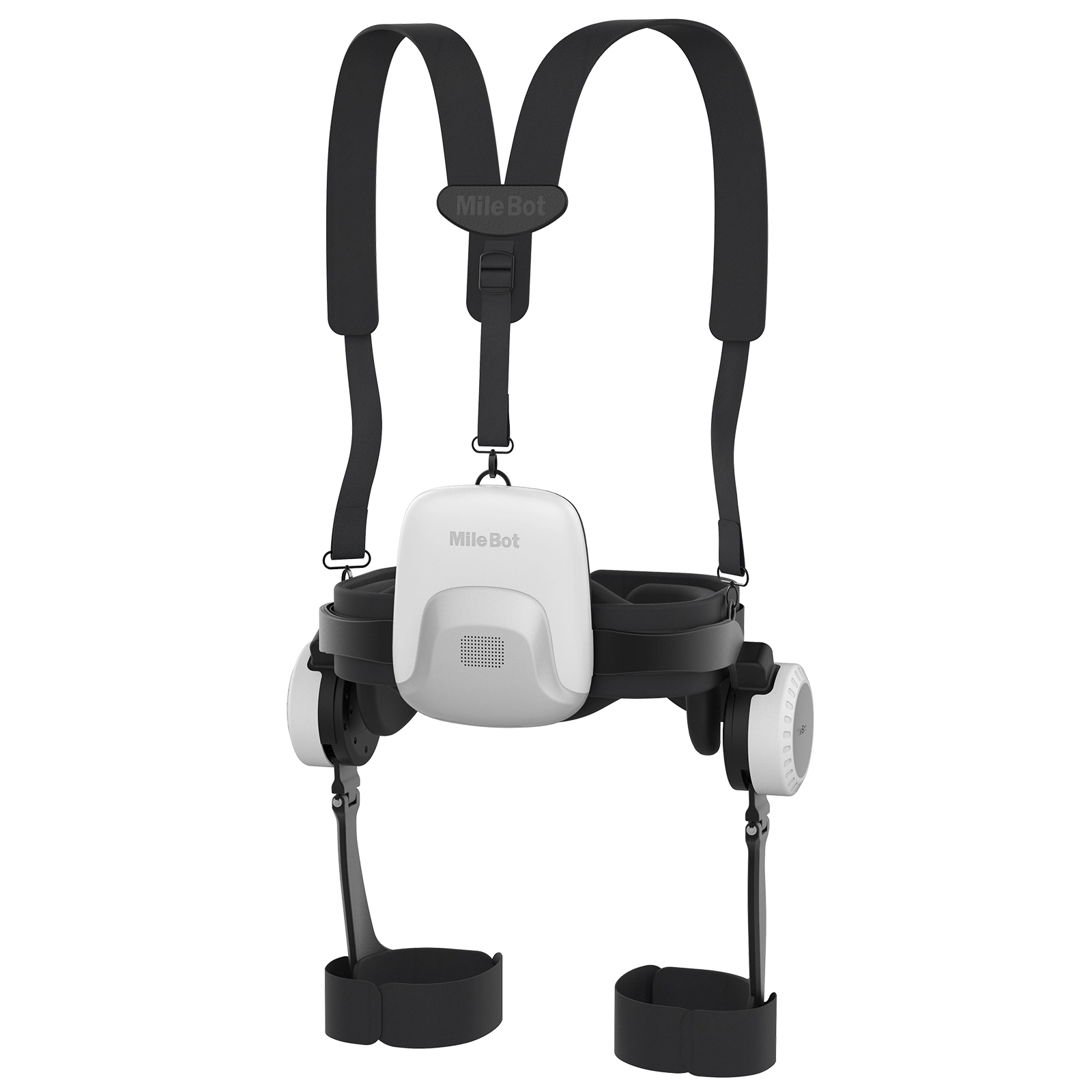
For individuals living with spinal cord injury (SCI), regaining mobility and independence can feel like an uphill battle. Traditional rehabilitation can yield improvements, but often plateaus. That’s where MileBot’s spinal cord injury exoskeleton systems come in—a revolutionary leap forward that offers hope, real motion support, and the opportunity to rebuild strength and confidence.
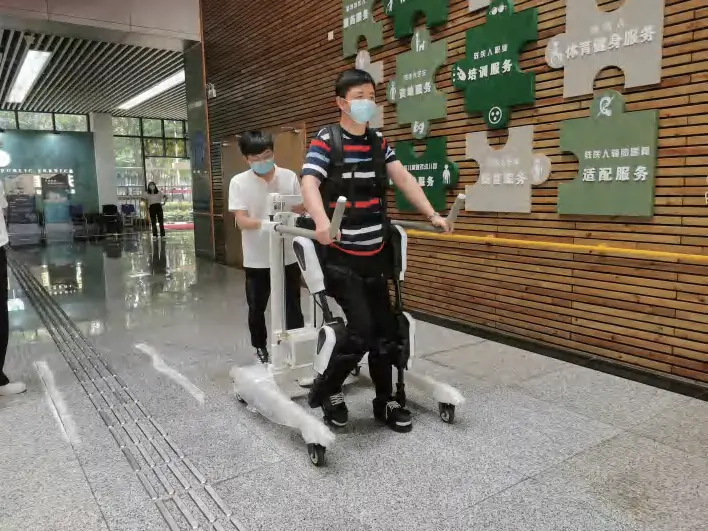
Spinal cord injury disrupts the communication between the brain and the body below the injury site. As a result:
Voluntary control of muscles below the injury may be diminished or lost
Sensation, balance, and coordination can be affected
Secondary complications (such as muscle atrophy, pressure sores, bone density loss) can further limit rehabilitation potential
For many SCI patients, restoring even partial walking ability can dramatically improve quality of life — physically, psychologically, and socially.
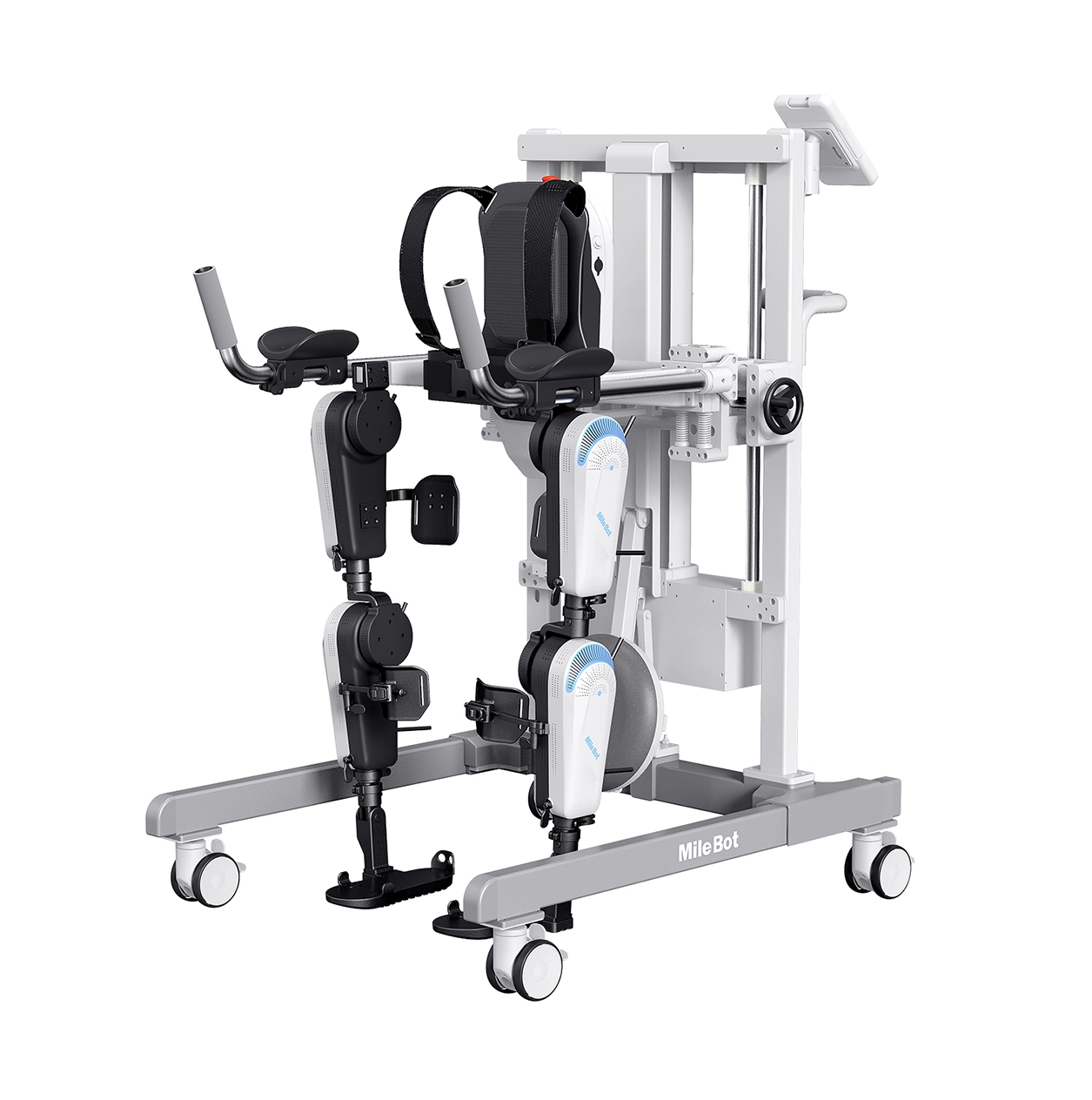
A robotic exoskeleton (often called a “walking exoskeleton”) is a wearable, powered device engineered to support natural movement in the lower limbs. These systems typically feature:
Sensors to detect user intention or motion
Actuators (motors or hydraulic systems) to assist joint movement
Control algorithms (real-time adaptive control)
Safety mechanisms (fall prevention, emergency stop)
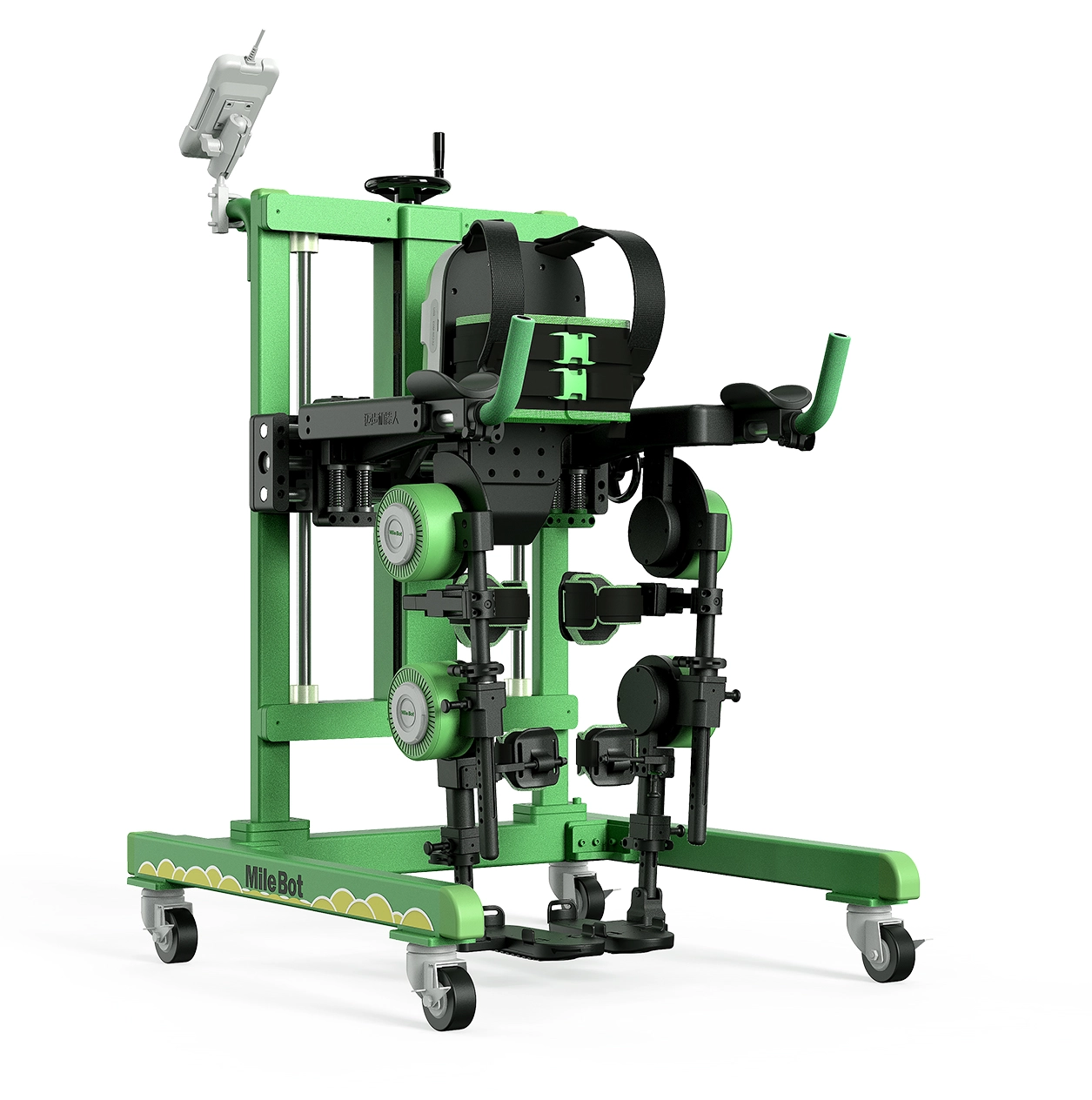
MileBot offers a versatile lineup, showcasing different types of rehabilitation robots, including:
BEAR (H Series) — Adult-focused system featuring both active and passive training modes, designed as a lower limb rehabilitation robot for higher-level rehabilitation.
BEAR (A Series) — Designed for adults with lower-limb locomotor dysfunction; emphasizes passive modes for early-stage recovery.
RELAX (C Series) — Tailored for children (height range 90 cm to 150 cm), with preset rehabilitative training programs.
Gait Assist Systems MAX (M & F Series) — Assistive / supportive systems for walking aid or gait training.
Together, these devices span a wide range of patient profiles — from pediatric to adult, and from severe impairment to moderate recovery.
MileBot’s exoskeleton spinal cord injury systems deliver multiple compelling benefits for rehabilitation, offering patients improved mobility, strength, and independence.
Improved Muscle Activation & Neuromuscular Reeducation
Assisted movement encourages muscles to reengage, reducing atrophy and promoting motor relearning.
Enhanced Gait Symmetry & Coordination
The exoskeleton can guide a more physiological gait pattern, reducing compensatory movements.
Neuroplasticity & Motor Recovery
Repeated, supported walking may stimulate central nervous system pathways and enhance neural reorganization.
Psychological Uplift & Independence
The ability to stand, walk, or move upright—even with assistance—can strengthen confidence and self-esteem.
Reduced Secondary Complications
Increased weight-bearing, joint movement, and circulation may help mitigate risks like bone density loss, pressure sores, and cardiovascular decline.
To maintain credibility and manage expectations, it’s essential to address constraints candidly:
Cost & Accessibility: Robotic exoskeleton systems remain advanced medical devices and may require significant investment or clinical partnerships.
User Suitability: The patient’s remaining physical condition (core strength, spasticity, bone health) may influence whether exoskeleton use is feasible.
Need for Supervision: Safe operation typically demands trained therapists or clinicians, especially during early sessions.
Fatigue & Wear: Extended use can lead to user fatigue; session duration should be tailored.
Risk Management: Fall risk, joint strain, and mechanical failure must be mitigated via safety features, careful protocols, and emergency stops.
To integrate a MileBot exoskeleton into rehabilitation, consider the following guidelines:
Initial Evaluation
Clinicians should assess the patient’s condition, including motor strength, spasticity, joint mobility, bone density, and overall health.
Gradual Introduction
Begin with supervised, short-duration sessions in passive mode to acclimate the patient to device motion.
Progressive Training Protocols
Gradually shift into active/assisted modes, increasing session duration and complexity (e.g., inclines, uneven surfaces) as tolerance grows.
Monitoring & Adaptation
Use gait metrics, muscle activity (EMG), fatigue scores, and patient feedback to adjust device assistance levels and session plans.
Safety & Maintenance
Always use harnesses, safety supports, clinical oversight; maintain regular checks on device integrity and calibration.
The field of exoskeleton-assisted SCI rehabilitation continues to evolve. Some intriguing directions include:
Brain–Machine Interface (BMI) Integration
Combining neural signals with exoskeleton control to drive intention-based movement.
Soft Exoskeletons / Exosuits
Lightweight, flexible wearable systems that reduce bulk while offering assistive support.
Adaptive / AI-driven Control Algorithms
Systems that learn and adapt to a patient’s evolving gait patterns, fatigue levels, and biomechanics.
Remote / Home-use Systems
Compact, safe designs that could let patients continue therapy outside of clinical settings.
MileBot is actively investing in research and development to bring these innovations into its next-generation exoskeleton platforms.
Comprehensive Product Range — From pediatric systems to adult assistive exoskeletons, MileBot covers varied patient needs.
Clinical-Grade Engineering & Safety — Built for rehabilitation use, with fallback systems and rigorous safety testing.
Customization & Support — Devices and protocols can be tailored, with robust technical and clinical backing.
Proven Track Record — MileBot has established its reputation in the medical robotics / rehabilitation field.
Q: Which kinds of spinal cord injuries are suitable for exoskeleton therapy?
A: Both complete and incomplete injuries may benefit, though the degree of benefit depends on residual function, patient health status, and therapy goals.
Q: How often should patients train using the exoskeleton?
A: Many rehabilitation programs recommend 3 to 5 sessions per week, with session length adapted to tolerance and fatigue.
Q: What limitations exist in using these systems?
A: High cost, supervision needs, physical prerequisites (strength, bone health), and risk of fatigue or mechanical failures are among the main constraints.


 English